
Menu
How to Get Rid of Fruit Flies in 2026 ( Ultimate Guide )
Fruit flies are the smallest pest you’ll ever deal with and somehow one of the most irritating. It starts with one or two hovering over the fruit bowl. You wave them off and forget about it. A few days later they’re at the sink, around the garbage, and in your face while you’re making coffee, and the kitchen quietly stops feeling like yours.
If that’s where you are right now, here’s the short answer before we get into the details. Traps only half work. What actually works is finding whatever is feeding them and taking it away, then trapping the adults that are left. Do both, and most kitchens are clear within a week.
Here’s how to do it properly
What's actually attracting them
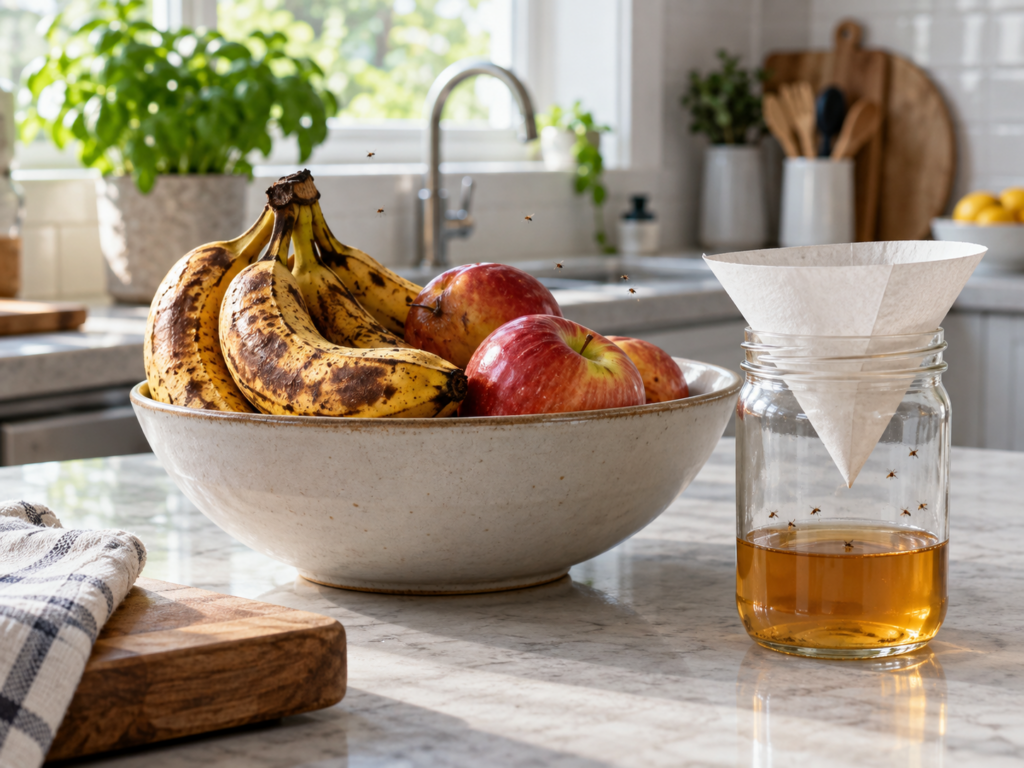
The name is misleading. Fruit flies aren’t picky about fruit. They want anything sweet, damp, or starting to ferment, and that describes a lot more of your kitchen than the bananas on the counter.
The usual suspects:
- Overripe, bruised, or split produce, including onions, potatoes, and tomatoes
- The garbage can itself (the can, not the bag)
- Recycling with a little juice, beer, or wine still in the bottom
- A kitchen compost bin
- The sink area: the drain, the strainer, the sponge, the damp dishcloth
- A spill that got wiped up, but not quite all the way
This is the part that throws people. You throw out the fruit, feel good about it, and the flies are still there two days later, because it was never really about the fruit. It was the sticky ring at the bottom of the recycling bin.
Why two flies turn into thirty
Fruit flies go from egg to adult in about a week to ten days at room temperature, and a single female can lay a few hundred eggs in her short life. So the jump from “a couple” to “a cloud” isn’t your imagination and it isn’t bad luck. It’s just math. The best time to deal with them is the day you spot the first one, but the plan below is the same whether you have three or three hundred.
Step 1: Find the source and get rid of it
This is the step most people rush, and it’s the one that decides whether the flies leave or keep coming back. Give yourself twenty minutes and go through the kitchen in this order.
Produce. Pick everything up and actually look at it. Anything soft, split, bruised, or leaking goes out. Anything very ripe but still good goes in the fridge. Check the pantry basket and the bottom of the crisper drawer too. One forgotten onion in the back of a cupboard can keep an infestation going all by itself.
The garbage can. Take the bag out, then look at the can. Wipe the rim, the underside of the lid, and the inside walls. If anything has pooled at the bottom, rinse it out with hot water and a bit of dish soap. Changing the bag every day while the can itself is sticky doesn’t fix anything.
Recycling. This is the one everybody forgets. Recycling sits around longer than garbage because it “isn’t dirty,” but a can with a teaspoon of beer in it, or a takeout container with dressing dried on the lid, is a buffet. Wash the bin out and get in the habit of rinsing anything that held food or a sweet drink before it goes in.
Compost. If you keep a compost bin in the kitchen, it’s the most likely source in the whole room. That doesn’t mean you have to stop composting. While you’re dealing with flies, though, empty it every day, wash the container, and keep soft fruit scraps out of it entirely.
The sink. Rinsing the sink isn’t the same as cleaning it. Scrub around the drain opening, empty and wash the strainer, and run hot water down the drain. Then deal with the cloth and the sponge. If either one smells even slightly off, that’s the smell the flies are following. Wash the cloth and throw the sponge out.
The counters. Wipe under the fruit bowl, around the coffee maker, and anywhere a drink might have been set down. You’re looking for the sticky spot you stopped noticing weeks ago.
You don’t need to deep-clean the whole house. You need the kitchen to be less rewarding for the flies tonight than it was last night.
Step 2: Trap the ones already flying around
Once the food supply is gone, the adults still in the room need somewhere to go. A trap gives them that.
The classic version works, and it’s the one I’d start with:
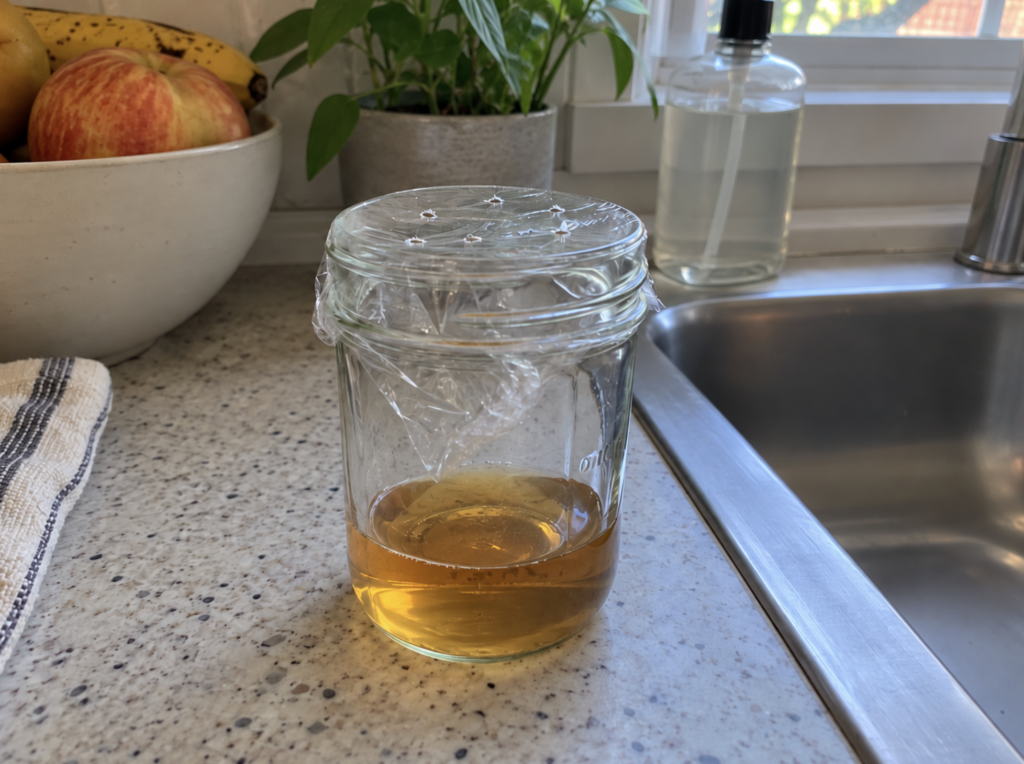
- Pour about an inch of apple cider vinegar into a small jar or glass.
- Add one drop of dish soap. Just one. It isn’t there for the smell. It breaks the surface tension so the flies sink instead of landing on top and flying off again.
- Cover the top with plastic wrap and poke a few holes in it with a toothpick, or roll a piece of paper into a funnel and set it in the mouth of the jar. Either way, it’s easy to get in and hard to get out.
- Put the trap where the flies actually are, not where it’s convenient. If they hang around the sink, it goes beside the sink.
- Dump it and refill it every two or three days. Old bait stops working.
If the vinegar isn’t pulling them in after a day or two, try a chunk of very ripe banana or a splash of red wine in the jar instead. Some kitchens respond better to one than the other, and there’s nothing wrong with running two traps at once.
Why the trap alone won't finish the job
I see this all the time. Someone sets one trap, wakes up to five flies in the jar and thirty still on the wall, and decides traps don’t work.
The trap is fine. The problem is competition. If there’s still a soft peach on the counter and the recycling still smells like juice, the flies have better options than your jar. Clean first and the same trap suddenly looks a lot more effective. The two steps only really work together.
Same reason swatting isn’t a strategy. It’s a fine stress release, but you’ll never out-swat something that lays eggs by the hundred.
Why they come back
You clean, you trap, the numbers drop, and four days later they’re back. That happens for one of two reasons, and both are fixable.
Either the original source was never fully dealt with (the fruit went out, but the bin never got washed), or a new one showed up. A single banana going soft on the counter is enough to restart the whole cycle.
There’s also a timing thing worth knowing. Cleaning cuts off the adults’ food, but any eggs that were already laid will still hatch over the following week. Seeing a few stragglers on day three doesn’t mean you failed. Keep the traps out, keep the sink dry, and give it a full week before you judge whether it worked.
Not sure they're fruit flies?
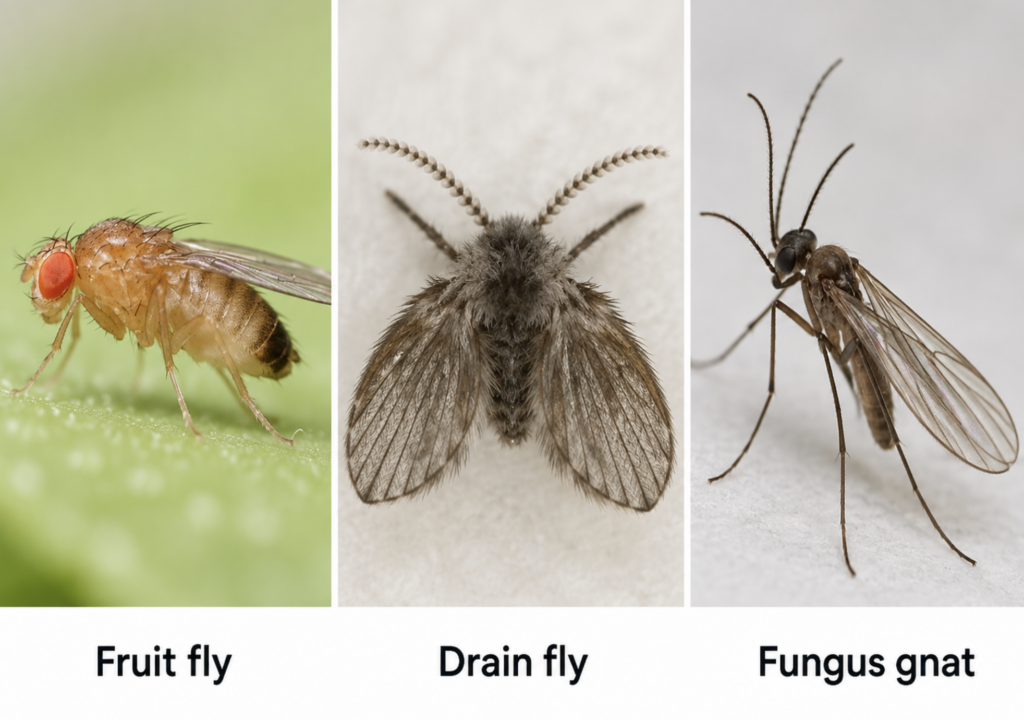
Not every tiny bug in the kitchen is a fruit fly, and the fix depends on which one you have.
- Fruit flies are tan or light brown, often with reddish eyes, and they hover around food.
- Drain flies are fuzzy and moth-like, and they sit still on walls near the sink or shower. To check, stick a strip of clear tape over the drain opening overnight, sticky side down. If there are flies stuck to it in the morning, they’re breeding in the drain, and that needs a proper scrub with a brush or an enzyme drain cleaner, not a vinegar trap.
- Fungus gnats are thin, dark, and mosquito-shaped. They come from overwatered houseplants, so the fix is letting the soil dry out, not cleaning the fruit bowl.
If you’ve done the full kitchen cleanup and the bugs are still hanging around a drain or a plant pot, you’re probably dealing with one of the other two.
Keeping them gone
None of this needs to turn into a chore. A few small habits are enough:
- Don’t let soft produce sit out. Fridge it or eat it.
- Rinse cans, bottles, and food containers before they go in the recycling.
- Empty compost every day or two, especially in warm weather.
- Wash the garbage and recycling bins themselves once in a while, not just the bags.
- Swap sponges and wash dishcloths before they start to smell.
- Wipe the sink dry at the end of the night.
That’s it. Nothing extreme, just enough to keep the kitchen from becoming a good place for them to settle in.
Bottom line
Find what’s feeding them and get rid of it. Wash the bins, not just the bags. Set a vinegar-and-dish-soap trap right where the flies gather. Then keep it up for a week instead of stopping the moment the numbers drop.
Fruit flies are annoying, but they aren’t complicated. They’re in your kitchen because something there is worth staying for. Take that away and they leave.
FAQ: getting rid of fruit flies
What’s the fastest way to get rid of fruit flies?
Remove whatever is attracting them and set a trap the same day. Doing both at once is faster than either alone. Expect a real difference within two or three days and a clear kitchen within about a week.
I threw out all the fruit. Why are they still here?
Because the fruit was probably only part of it. Check the garbage can, the recycling, the compost, the sink drain, and the sponge. One of those is almost always the real source.
Does the apple cider vinegar trap actually work?
Yes, for most people, as long as the kitchen has been cleaned up so the trap isn’t competing with better food. Add one drop of dish soap so the flies sink, and refresh it every couple of days.
Can fruit flies come from the drain?
Fruit flies gather around sinks because of moisture and food residue, but if they seem to be coming out of the drain itself, they may actually be drain flies.
How long does it take to get rid of fruit flies?
Usually about a week, because eggs laid before you cleaned will still hatch. Keep the traps out and the kitchen clean for that long and the cycle breaks.
Recent Posts
DHG
Company
© 2026 Daily How Guide. All Rights Reserved.